
How to Organize Your Closet: Practical System That Actually Works (Step-by-Step Guide)

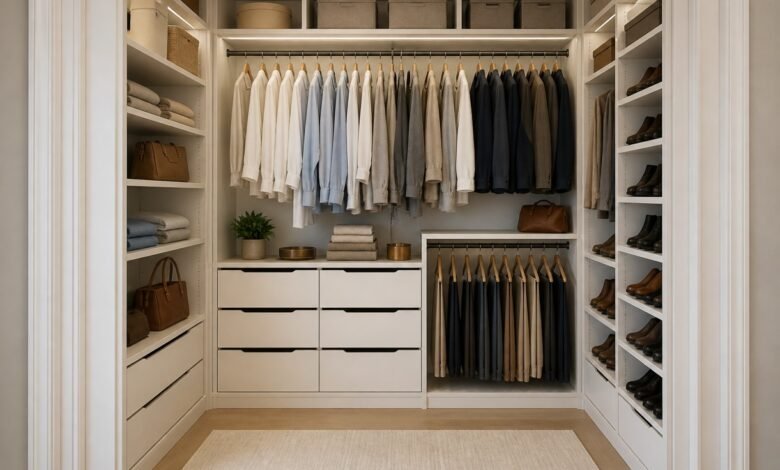
If your closet feels like a black hole where clothes disappear, pile up, and somehow still leave you with “nothing to wear” — you’re not the only one dealing with this. Most people don’t actually have a storage problem. They have a system problem. Learning how to organize your closet isn’t about making it look Pinterest-perfect. It’s about building a setup that works in real life — when you’re in a hurry, tired, or getting ready in 5 minutes.
In this guide, you’ll learn:
- how to declutter without overthinking
- how to arrange clothes so you actually wear them
- how to use every inch of your closet space
- and how to keep it organized without constant effort
Whether you have a small apartment closet or a full walk-in, these strategies are designed to be practical, not theoretical.
Why Most Closets Stay Messy (And How to Fix It)
Before jumping into bins and hangers, it’s important to understand one thing:
👉 Most closets don’t get messy by accident — they were never organized properly to begin with.
The 3 Biggest Organization Mistakes
- Keeping too many clothes “just in case”
According to wardrobe studies, most people wear only about 20–30% of their clothes regularly. The rest just takes up space. - No clear system for grouping items
Mixing work clothes, gym wear, and casual outfits creates visual clutter and slows down decision-making every day. - Ignoring vertical space
Empty air in your closet = wasted storage. Most closets could hold 30–50% more items with better layout.
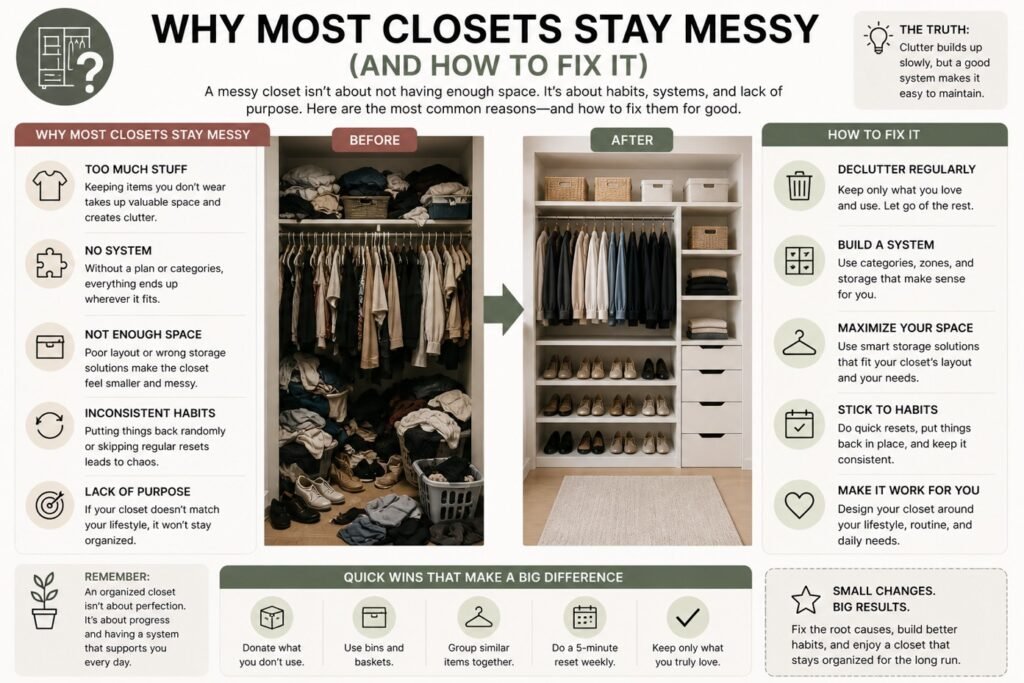
Most closet problems come from lack of system, not lack of space
What an Organized Closet Actually Looks Like
A well-organized closet is not just “clean.” It has:
- Clear categories (you instantly know where things are)
- Easy access (no digging or moving piles)
- Logical placement (based on how often you use items)
💡 Expert tip: Professional organizers often design closets based on behavior, not aesthetics. If you reach for something daily, it should be the easiest item to grab.
Step 1 – Take Everything Out and Start Fresh
The biggest mistake people make when trying to organize a closet is working around the mess instead of resetting it completely.
If you want a system that actually lasts, you need a clean start.
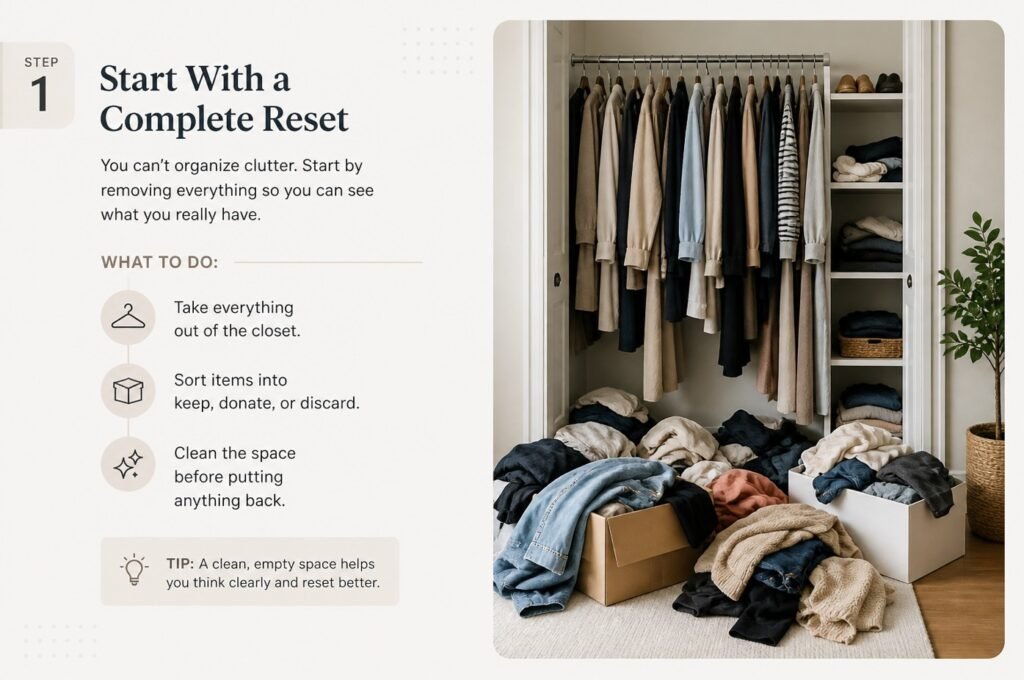
Why You Should Remove Everything (Yes, Everything)
Taking everything out may feel extreme, but it solves several problems at once:
- You see the real volume of your clothes
- You stop organizing things you don’t even need
- You can redesign the space from scratch
Professional organizers call this a “reset method” — and it’s one of the fastest ways to fix a cluttered wardrobe.
How to Do It Without Feeling Overwhelmed
Instead of throwing everything in one pile, use a simple zone system:
- Zone 1: Hanging clothes
- Zone 2: Folded items (shelves/drawers)
- Zone 3: Shoes
- Zone 4: Accessories (bags, belts, etc.)
Work one zone at a time. This keeps the process manageable and prevents burnout.
Quick Win: Clean Before You Organize
Once your closet is empty, don’t skip this step.
Do a quick refresh:
- wipe shelves and rods
- vacuum the floor
- remove dust and lint
- add a neutral scent (optional, but effective)
It may sound minor, but a clean space actually increases the likelihood you’ll maintain the system later.
Expert Insight
Many people think organizing is about buying storage products. In reality, it’s about reducing friction.
If your closet is hard to use, you won’t keep it organized — no matter how many bins you buy.
That’s why starting fresh is critical when learning how to organize your closet properly.
Step 2 – Declutter Like a Pro (Not Emotionally)
At this stage, most people get stuck.
Not because it’s physically hard — but because it’s mentally uncomfortable.
If you skip proper decluttering, no closet system will work long-term. You’ll just reorganize the same chaos.
The 80/20 Rule for Clothing
A simple but powerful principle:
Most people wear 20% of their clothes 80% of the time.
That means a large portion of your closet is just taking up space.
Instead of asking “Should I get rid of this?”, flip the question:
👉 “Does this deserve space in my daily system?”
A Practical Filtering System (That Actually Works)
Use this checklist when deciding what to keep:
- You wore it in the last 6–12 months
- It fits you right now (not “someday”)
- You would buy it again today
- It matches at least 2–3 outfits
If something fails 2 or more of these — it’s usually clutter.
Common Decluttering Traps to Avoid
- “I might need this someday”
→ If you haven’t needed it in a year, you probably won’t. - “It was expensive”
→ The money is already gone. Keeping it won’t bring it back. - “I feel guilty throwing it away”
→ Donate it. Let it be useful to someone else.
What to Do With Clothes You Remove
Don’t just create a new pile of clutter.
Use a simple exit system:
- Donate: everyday wearable items in good condition
- Sell: branded or high-value pieces
- Recycle: damaged or worn-out fabrics
- Trash: items beyond repair
Pro Tip: Use the “Reverse Hanger Trick”
Here’s a method used by professional organizers:
- Turn all hangers backward
- After wearing something, return it normally
- After 2–3 months, see what’s still reversed
That’s what you’re not wearing.
Why This Step Matters More Than Storage
You can buy the best organizers in the world, but if your closet is full of unused items, it will always feel crowded.
Decluttering is what creates:
- breathing room
- visual clarity
- faster decisions
And that’s the real goal when learning how to organize your closet effectively.
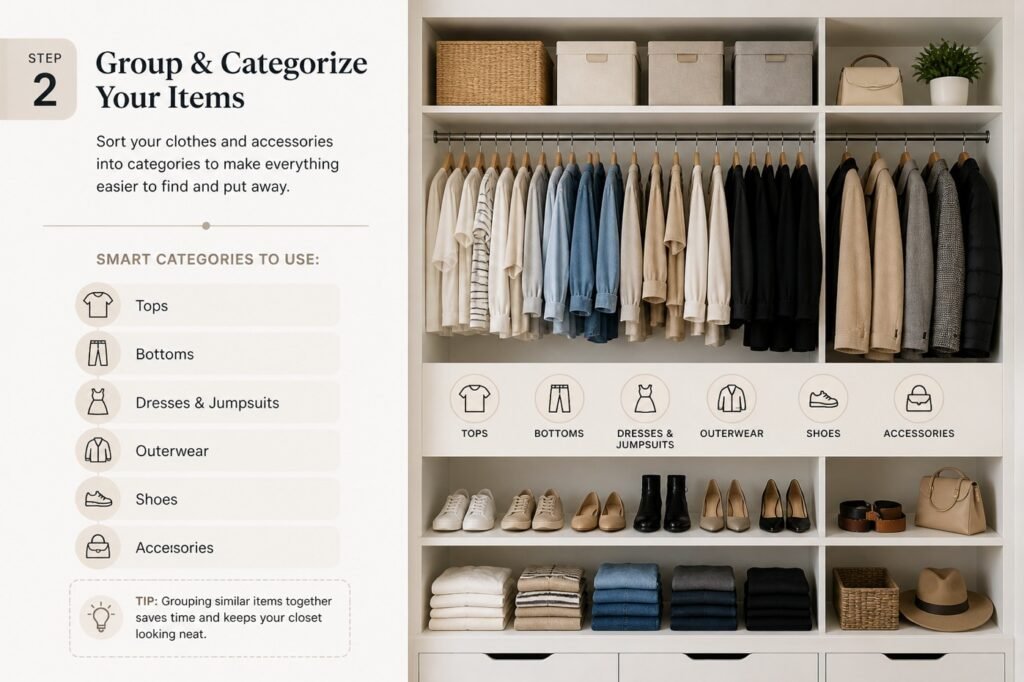
Step 3 – Categorize Your Closet the Smart Way
Now that you’ve removed what you don’t need, the next step is building a system that makes your closet easy to use every day.
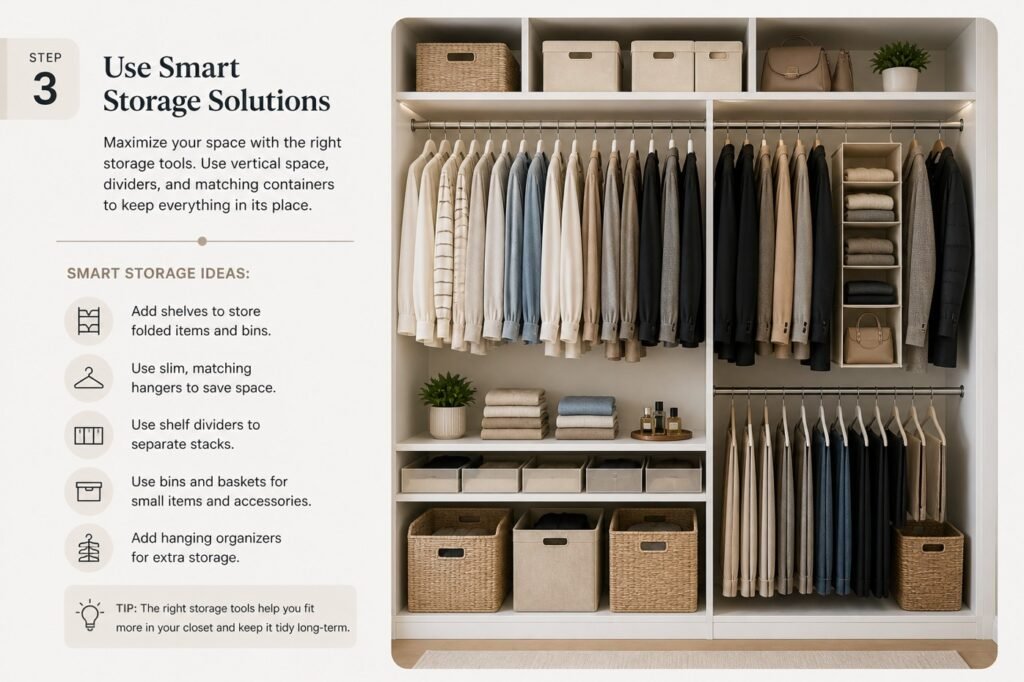
This is where most guides stay too basic — “sort by type” — but in reality, a functional closet uses multiple layers of organization.
Start With Primary Categories
First, group everything by clothing type:
- Tops (t-shirts, shirts, blouses)
- Bottoms (jeans, pants, skirts)
- Outerwear (jackets, coats)
- Dresses / one-piece outfits
- Activewear / gym clothes
- Homewear / sleepwear
This creates visual clarity — your brain processes grouped items much faster than mixed ones.
Then Add a Second Layer (This Is What Most People Skip)
Once you have categories, refine them using one of these systems:
Option 1: By Frequency of Use
- Daily wear → easiest to reach
- Occasional → mid-level
- Rare/seasonal → top or back
Option 2: By Season
- Current season → front and center
- Off-season → higher shelves or storage bins
Option 3: By Function (Highly Recommended)
- Work outfits
- Casual wear
- Gym / active
- Events / formal
👉 This method is especially effective because it matches how you actually choose outfits in real life.
Should You Organize by Color?
Color coding is popular — but it’s optional.
Use it only if:
- you already have clear categories
- your wardrobe is large
- you’re visually driven
Otherwise, it can slow you down instead of helping.
Build “Ready-to-Wear” Zones
Here’s a more advanced trick used in professional closet organization:
Instead of just sorting items, group pieces that work together.
For example:
- Work shirts near work pants
- Gym tops near leggings
- Casual outfits in one section
This reduces decision fatigue and makes getting dressed faster.
Common Mistake to Avoid
Don’t mix different systems randomly.
Example of a bad setup:
- some items by color
- some by type
- some by season
That creates confusion instead of structure.
👉 Pick 1 main logic + 1 supporting layer — and stick to it.
Expert Insight
People don’t fail at closet organization because they lack space.
They fail because their system doesn’t match their behavior.
If you naturally think in outfits → organize by function.
If you think visually → color + category works better.
This step is where your closet starts to feel intentional, not just clean.
Step 4 – Maximize Closet Space (Even in Small Closets)
At this point, your closet is decluttered and categorized. Now the goal is simple:
👉 Use the space you already have — more efficiently.
Most closets aren’t too small. They’re just poorly utilized.
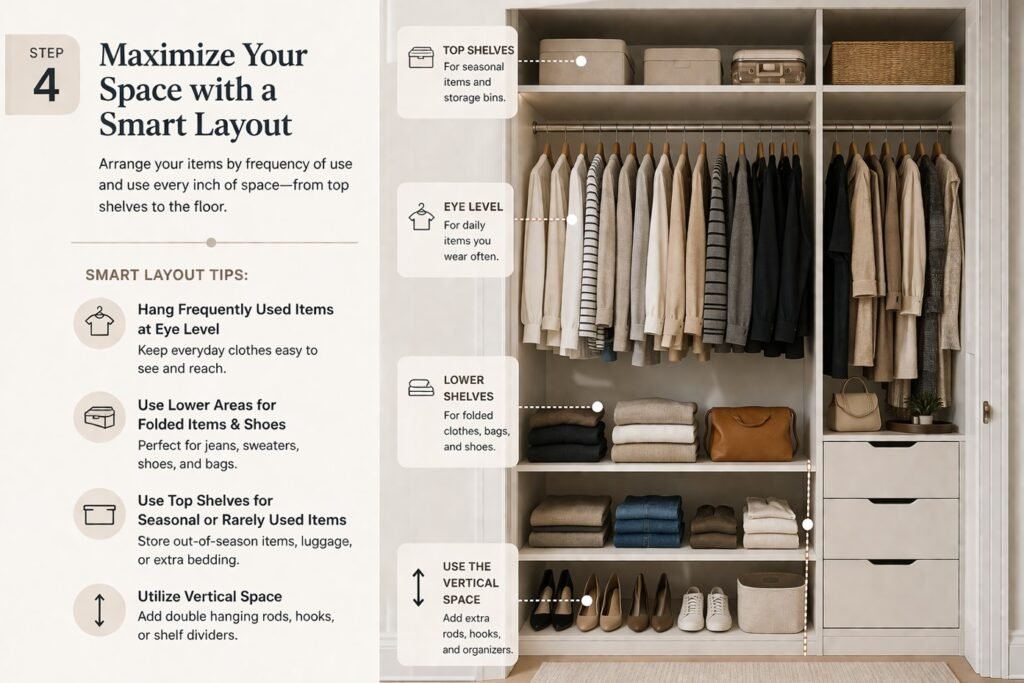
Use Vertical Space Properly
Look at your closet right now — chances are, there’s empty space above or below your hanging clothes.
That’s wasted storage.
Here’s how to fix it:
- Add shelves above hanging rods
- Use stackable storage bins
- Install hanging organizers for folded clothes
- Place rarely used items on upper shelves
Even a single extra shelf can increase usable space by 20–30%.
The Double Hanging Rod Trick
This is one of the simplest upgrades with the biggest impact.
Instead of one rod for all clothes, split it into two levels:
- Top rod → shirts, jackets
- Bottom rod → shorter items (tops, folded pants)
This works especially well for:
- small closets
- apartments
- shared wardrobes
👉 You instantly double your hanging capacity without expanding the closet.
Storage Solutions That Actually Work (Not Just Look Good)
Don’t overbuy organizers. Focus on tools that solve real problems.
- Matching slim hangers – save space and create uniformity
- Shelf dividers – keep stacks from collapsing
- Clear bins – easy visibility for seasonal items
- Under-shelf baskets – use hidden vertical gaps
- Shoe racks – prevent floor clutter
Smart Placement Strategy
Where you place items matters just as much as how you store them.
Use this layout logic:
- Eye level → daily essentials
- Chest to waist level → frequently used items
- Top shelves → seasonal or rarely used
- Floor area → shoes or bins
This reduces friction and makes your closet easier to maintain.
Small Closet Hack Most People Miss
If space is tight, stop storing everything in one place.
Instead:
- rotate clothes by season
- store off-season items under the bed or in another closet
- keep only current-use items accessible
This alone can make a small closet feel twice as big.
Expert Insight
Professional organizers often say:
“You don’t need more space — you need better layout.”
Before buying anything new, always ask:
- Am I using all vertical space?
- Can I split hanging areas?
- Are items placed based on usage?
This step transforms your closet from “organized” to efficient.
Step 5 – Organize Clothes for Easy Daily Use
At this stage, your closet may already look better — but the real test is this:
👉 Does it make your daily routine faster or slower?
Because an organized closet isn’t about appearance. It’s about speed and simplicity.
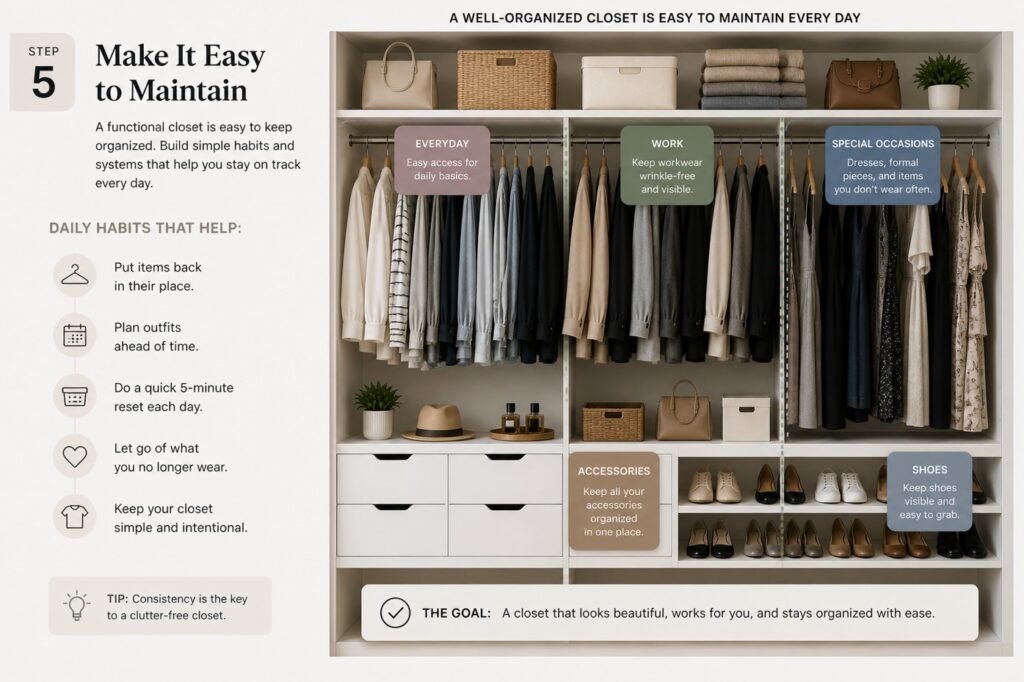
Use the “Grab-and-Go” Principle
Your closet should be arranged based on how you actually get dressed.
Most people follow a pattern:
- choose a category (work, casual, gym)
- pick 1–2 main items
- build around them
So your closet should support that flow.
Create Functional Zones
Instead of just grouping by type, divide your closet into zones based on lifestyle:
- Work zone – shirts, trousers, blazers
- Casual zone – t-shirts, jeans, everyday wear
- Active zone – gym clothes, спортивний одяг
- Special occasions – formal or rarely used outfits
This reduces the time you spend searching and switching contexts.
Keep Outfit Components Close Together
One of the simplest but most effective upgrades:
👉 Store items that go together — together.
For example:
- jeans near casual tops
- workout tops near leggings
- work shirts near pants
This makes it easier to build outfits quickly without scanning the entire closet.
Eye-Level Rule (Behavior-Based Placement)
Where things are placed directly affects how often you wear them.
Use this structure:
- Eye level → your most-used items
- Below eye level → secondary items
- Hard-to-reach areas → rarely used pieces
If something is hard to reach, your brain treats it as “not available.”
Should You Fold or Hang?
A common question in closet organization.
Here’s a simple rule:
- Hang: shirts, blazers, dresses, wrinkle-prone items
- Fold: t-shirts, sweaters, gym clothes
- Store in bins: seasonal or rarely used items
This helps balance space efficiency with practicality.
Avoid Overcrowding (Critical Rule)
Even a well-organized closet will fail if it’s too full.
Try to keep:
- about 10–20% free space on rods
- breathing room between categories
Why it matters:
- clothes stay visible
- items don’t get wrinkled
- it’s easier to maintain order
Expert Insight
Closets that stay organized long-term are designed around habits, not perfection.
If you naturally drop clothes instead of folding them — create a system that allows for that (like open bins or baskets).
Don’t fight your behavior. Design around it.
At this point, your closet isn’t just organized — it’s optimized for daily life.
If you’re also looking to improve how you store smaller items, check out our detailed guide on closet drawer organization ideas to keep everything neatly arranged and easy to find.
Step 6 – Closet Organization Ideas for Small Spaces
If you’re working with a small closet, the strategy changes slightly.
The goal is no longer just organization — it’s maximizing every inch without creating visual clutter.
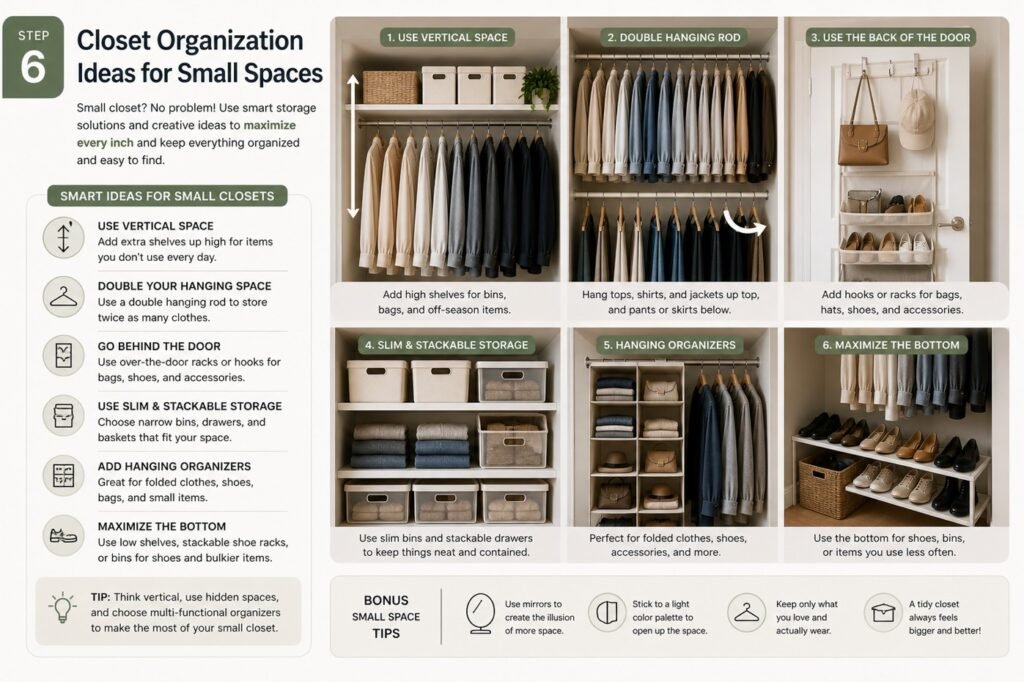
Think in Layers, Not Just Sections
In small spaces, one level of storage isn’t enough.
You need to stack functions:
- Top layer → seasonal storage (bins, boxes)
- Middle layer → daily hanging clothes
- Lower layer → shoes or baskets
- Doors / sides → accessories, hooks, organizers
This transforms a small closet into a multi-level system.
Use the Closet Door (Most Ignored Space)
Closet doors are often wasted — but they can hold a surprising amount.
Smart ways to use them:
- hanging organizers for shoes
- hooks for bags, belts, scarves
- slim racks for accessories
This alone can free up a lot of internal space.
Go Vertical With Hanging Organizers
When shelves are limited, vertical organizers become essential.
They’re perfect for:
- folded clothes
- sweaters
- bags
- kids’ clothing
And they don’t require installation — which makes them ideal for renters.
Rotate Instead of Overloading
One of the most effective small closet strategies:
👉 Don’t store everything at once.
Instead:
- keep only current-season items inside
- move off-season clothes to storage (under bed, boxes, другой шкаф)
- rotate every 3–6 months
This reduces overcrowding and makes your closet easier to use daily.
Use Uniform Storage to Reduce Visual Clutter
Small closets feel messy faster — even when they’re organized.
That’s why visual consistency matters more here.
- Use the same type of hangers
- Choose neutral storage bins
- Avoid mixing too many colors or styles
- Keep labels simple and readable
A cleaner look makes the space feel bigger instantly.
Small Closet Mistakes to Avoid
- stacking clothes too high (they collapse and create mess)
- mixing categories in one bin
- storing rarely used items in easy-to-reach areas
- buying bulky organizers that reduce usable space
Expert Insight
In small spaces, every decision compounds.
A single inefficient shelf or bulky box can reduce usable space by 10–15%.
That’s why small closet organization is less about “adding more” and more about removing friction and simplifying access.
This is where even the smallest closet can start feeling functional — not frustrating.
Step 7 – Maintain Your Closet Without Reorganizing Every Month
Organizing your closet once is easy.
Keeping it that way — that’s where most people fail.
The goal here is not perfection. It’s building a system that maintains itself with minimal effort.
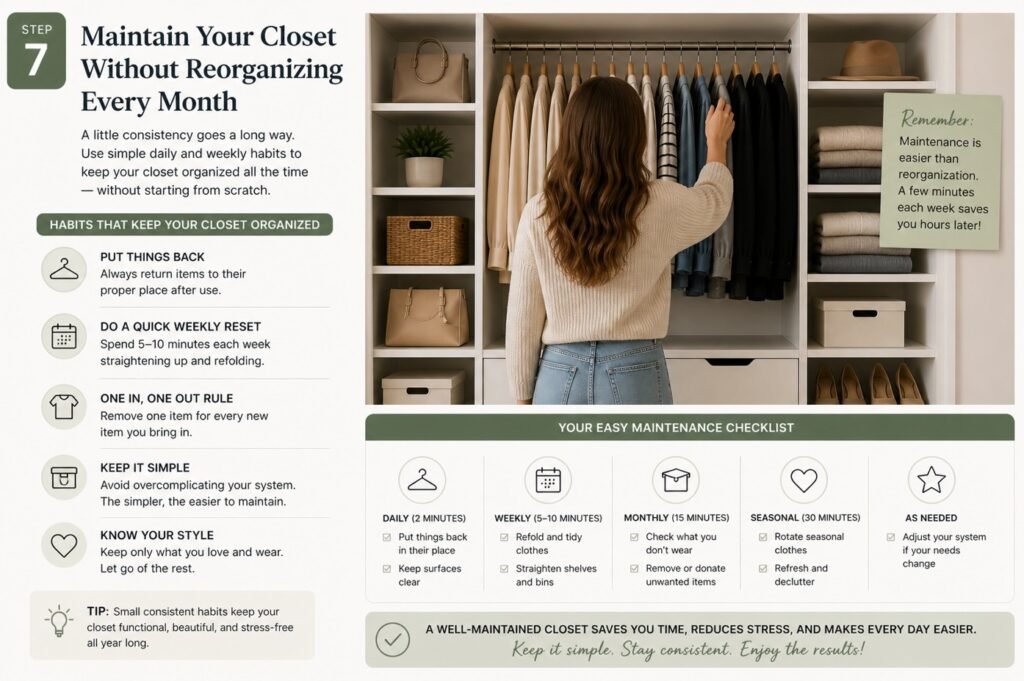
Use the “One In, One Out” Rule
This is one of the simplest ways to prevent clutter from coming back.
- Buy 1 new item → remove 1 old item
- Preferably from the same category
- Apply consistently (not occasionally)
This keeps your wardrobe size stable and intentional.
Do a 5-Minute Weekly Reset
Instead of waiting for chaos to build up, maintain your system regularly.
Once a week:
- put misplaced items back
- fix collapsed stacks
- remove anything you didn’t wear
This takes less than 5 minutes but prevents full reorganization later.
Reassess Every Season
Clothing needs change throughout the year.
Every 3–4 months:
- rotate seasonal items
- review what you actually wore
- remove what no longer fits your lifestyle
This keeps your closet aligned with reality, not habits from the past.
Create a “Temporary Zone”
Not everything needs a permanent place immediately.
Use a small section for:
- recently worn clothes
- items you’re unsure about
- in-between outfits
This prevents clutter from spreading across the entire closet.
When to Reset Again
Even the best system needs occasional adjustment.
Signs it’s time:
- you can’t find things quickly
- categories start mixing
- clothes pile up instead of staying organized
If that happens, don’t panic — just repeat the process (faster this time).
When You Need Professional Closet Setup or Assembly
Sometimes organization alone isn’t enough.
If your closet lacks structure — shelves, rods, or proper layout — no system will fully fix the problem.
This is where professional help makes sense.
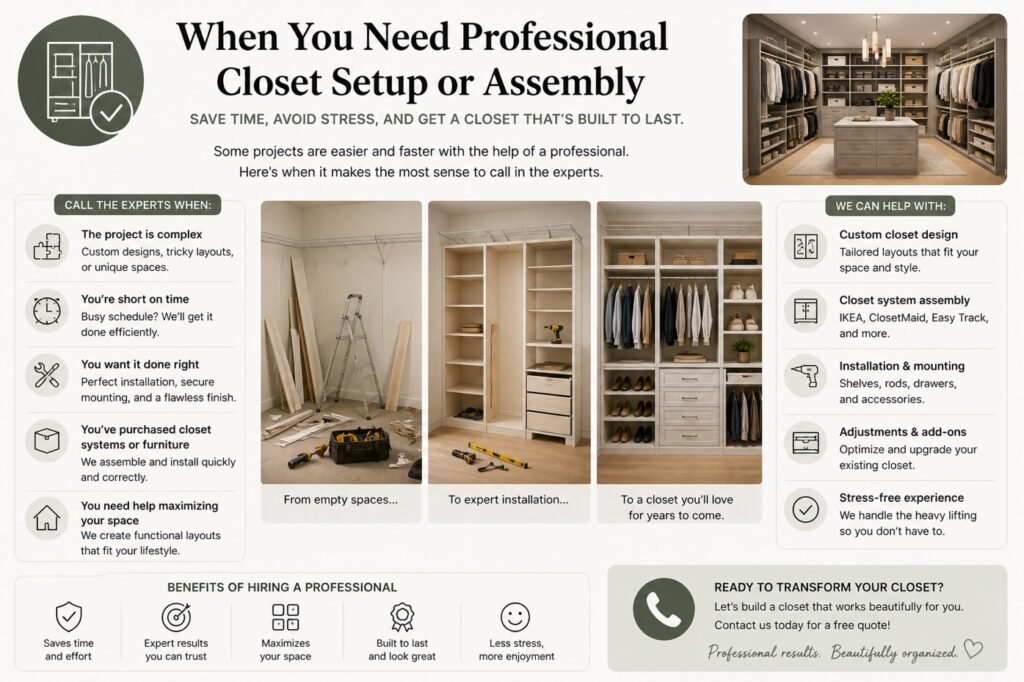
Need help with closet assembly or installation? Our team can build a system that fits your space perfectly.
If you’re planning to install a new closet system or upgrade your storage setup, it’s important to follow the right process. You can also explore our detailed furniture assembly step-by-step guide to understand how professional installation works and what to expect.
You may need assistance if:
- your closet has limited or неудобное storage layout
- you want to install shelves or a custom system
- you’re upgrading during a move or renovation
At Furniture Assembly, we help turn basic closets into functional storage systems:
- installation of closet shelves and rods
- assembly of storage units
- optimization of small or awkward spaces
A well-built setup makes organizing easier — and keeping it that way much more realistic.
Professional Closet Assembly Services Near You
If you’re planning to upgrade your closet or install a new storage system, working with professionals can save time and ensure everything is installed correctly.
We provide closet assembly and furniture installation services in several locations across South Florida:
Why This Matters
Choosing professional help can:
- ensure proper installation of closet systems
- maximize your available space
- save hours of setup time
- improve durability and safety
Build a System, Not Just a Clean Closet
A clean closet looks good for a day.
A system works every day.
Learning how to organize your closet isn’t about folding techniques or buying more storage. It’s about:
- removing what you don’t use
- structuring what you keep
- and making everything easy to access
If your closet supports your daily routine, you’ll spend less time searching, less time stressing — and more time actually using what you own.
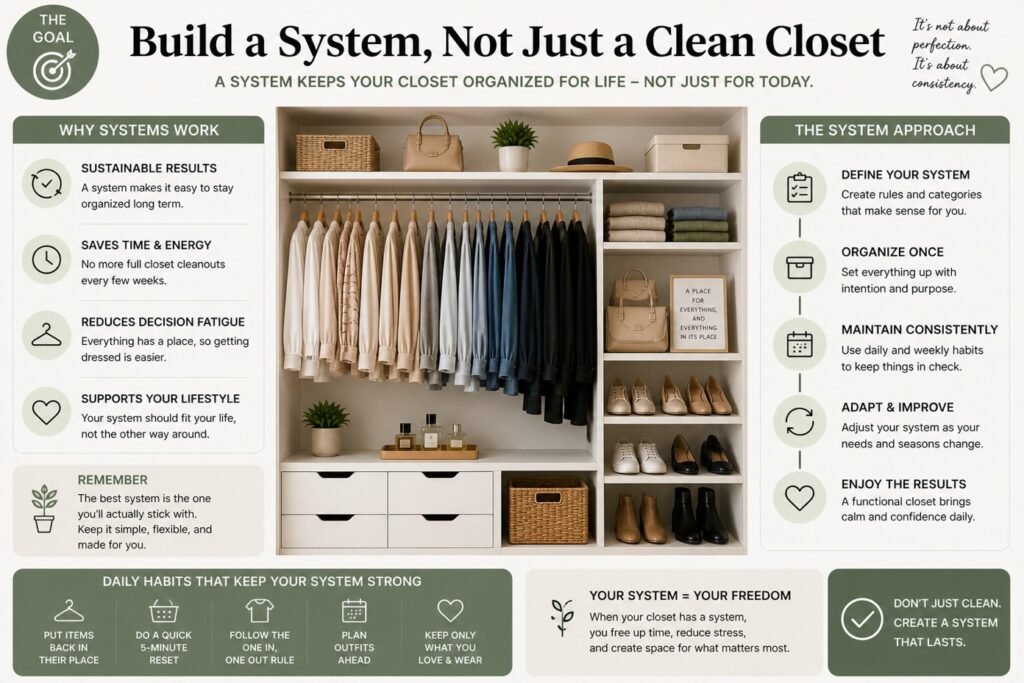
A well-organized closet isn’t about cleaning — it’s about building a system that works every day.
FAQ
How often should I organize my closet?
You don’t need to fully reorganize your closet often. A full reset is usually enough every 3–6 months. However, a quick weekly check (5–10 minutes) helps maintain order and prevents clutter from building up again.
What is the best way to organize a small closet?
The best approach for small closets is to maximize vertical space and reduce clutter. Use slim hangers, add shelves, and store off-season clothes separately. Keeping only frequently used items in your closet makes a big difference.
Should I fold or hang my clothes?
It depends on the type of clothing. Items like shirts, dresses, and jackets are better hung to prevent wrinkles. T-shirts, sweaters, and gym clothes can be folded to save space. A mix of both works best for most closets.
How do I declutter my closet without regret?
Use a simple rule: if you haven’t worn an item in the last 6–12 months and it doesn’t fit or match your current style, it’s likely safe to remove. Donating clothes can also make the process easier emotionally.
What are the best closet organization ideas?
Some of the most effective ideas include:
grouping clothes by category or function
using matching hangers
adding shelf dividers and storage bins
organizing by frequency of use
creating zones for different types of outfits
How can I keep my closet organized long-term?
Consistency matters more than effort. Follow the “one in, one out” rule, do quick weekly resets, and reassess your wardrobe every season. A simple system that fits your habits is easier to maintain.
Do I need closet organizers or systems?
Not always. Many closets can be improved just by decluttering and rearranging items. However, if your space lacks shelves or structure, adding organizers or installing a closet system can significantly improve functionality.
Can professional help improve closet organization?
Yes. If your closet layout is inefficient or lacks storage elements, professional assembly and installation can make a big difference. Proper shelving, rods, and layout design help maintain long-term organization.
How do you organize a closet step by step?
Start by removing everything from your closet, then declutter items you no longer wear. Group clothes by category, maximize vertical space, and arrange items based on how often you use them. Finish by maintaining the system with regular resets.
What is the first step in organizing a closet?
The first step is to take everything out. This helps you see how much you actually own and prevents organizing items you don’t need. It also allows you to clean and reset the space properly.
How do I organize my closet when I have too many clothes?
Focus on decluttering first. Keep only items you wear regularly and that fit your current lifestyle. Then use space-saving solutions like slim hangers, vertical storage, and seasonal rotation to manage the remaining clothes.
How do I organize my closet like a professional?
Professional organizers focus on functionality. They create zones based on lifestyle (work, casual, gym), use vertical space efficiently, and design the layout around daily habits — not just appearance.
How long does it take to organize a closet?
It depends on the size and amount of clutter. A small closet may take 1–2 hours, while a larger or heavily cluttered space can take half a day. Breaking the process into zones makes it faster and more manageable.
Is it better to organize a closet by color or type?
Organizing by type is more practical for daily use. Color coding can be added as a secondary system if you want a cleaner visual look, but it shouldn’t replace functional grouping.

